In the transport and logistics sector, visitor management is not a gatehouse or reception task; it is a safety, security, and operational control embedded into supply chain integrity, workplace health and safety, and regulatory compliance. Operators must maintain strict, provable oversight of who is onsite, why they are there, what depots, warehouses, terminals, yards, or transport assets they are authorised to access, and whether those decisions can be demonstrated during audits, incidents, investigations, or regulator reviews.
This guide outlines how transport and logistics organisations can securely and at scale manage visitors using the AccessFlow application, leveraging configurable workflows for visitor pre-registration, identity verification and validation, risk-based approvals, digital inductions, real-time visibility, and audit-ready reporting across warehouses, distribution centres, ports, terminals, and transport hubs.
Transport and logistics environments involve mixed-use, high-traffic, and safety-sensitive areas where different visitor types carry materially different risks. Within AccessFlow, visitor management begins with structured, risk-based classification rather than ad-hoc decisions at gates or loading docks.
Typical transport and logistics visitor categories configured in AccessFlow include:
For each category, AccessFlow allows operators to define:
By configuring these rules directly in the AccessFlow application, higher-risk visitor categories such as drivers, contractors, or after-hours visitors are automatically subject to stronger controls before arrival.
Unregistered or uncontrolled visitors represent a significant safety and operational risk in transport and logistics environments.
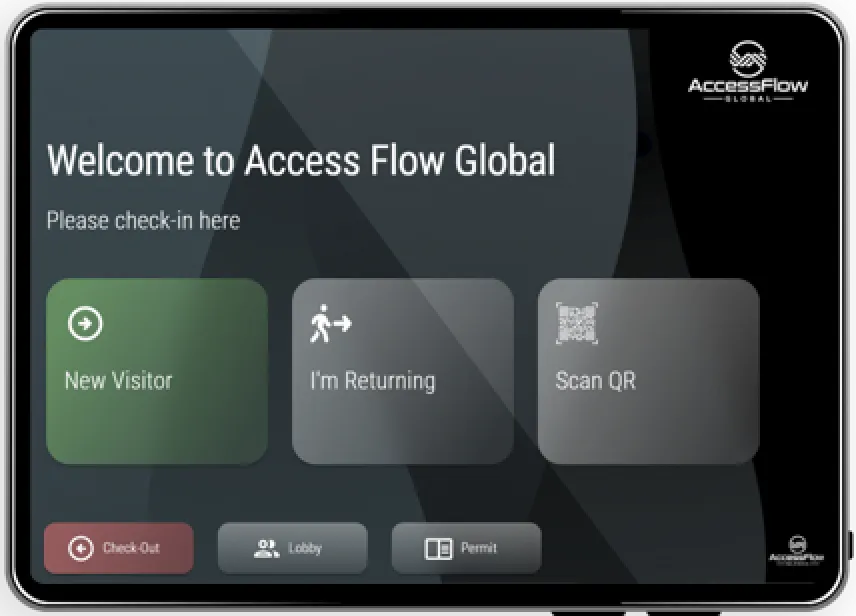
AccessFlow enforces a pre-registration-first visitor model, requiring:
The AccessFlow workflow ensures that no visitor arrives onsite without ownership, justification, and an approval pathway recorded in the system, supporting clear accountability before access to operational areas is granted.
For warehouses, distribution centres, terminals, secure yards, and back-of-house operational areas, formal identity verification is an important safety and security control.
ID controls configurable within AccessFlow include:
Within AccessFlow, ID verification can be configured as mandatory for specific visitor categories or locations and optional for low-risk administrative or public-facing areas, ensuring controls remain proportionate to risk and operational throughput.
Visitor approvals in transport and logistics must be structured, auditable, and aligned with safety management systems and operational governance.
AccessFlow enables configurable approval workflows that can include:
All approval decisions are logged within AccessFlow, and access is automatically blocked if approval conditions are not met, providing defensible evidence that access decisions were deliberate, controlled, and policy-aligned.
Paper sign-in books and verbal briefings do not meet modern transport and logistics safety or compliance expectations.
AccessFlow digitises visitor inductions and declarations, including:
All declarations completed in AccessFlow are timestamped, centrally stored, and easily retrievable, ensuring consistent safety compliance across sites and operations.
Visitor access in transport and logistics environments must be tightly controlled, monitored, and automatically revoked to protect people, assets, and supply chain continuity.
Through AccessFlow, organisations can enforce:
AccessFlow governs who should be onsite and for how long, while integrating with physical access control systems where required to ensure approved decisions are enforced at gates, docks, yards, and secure areas.
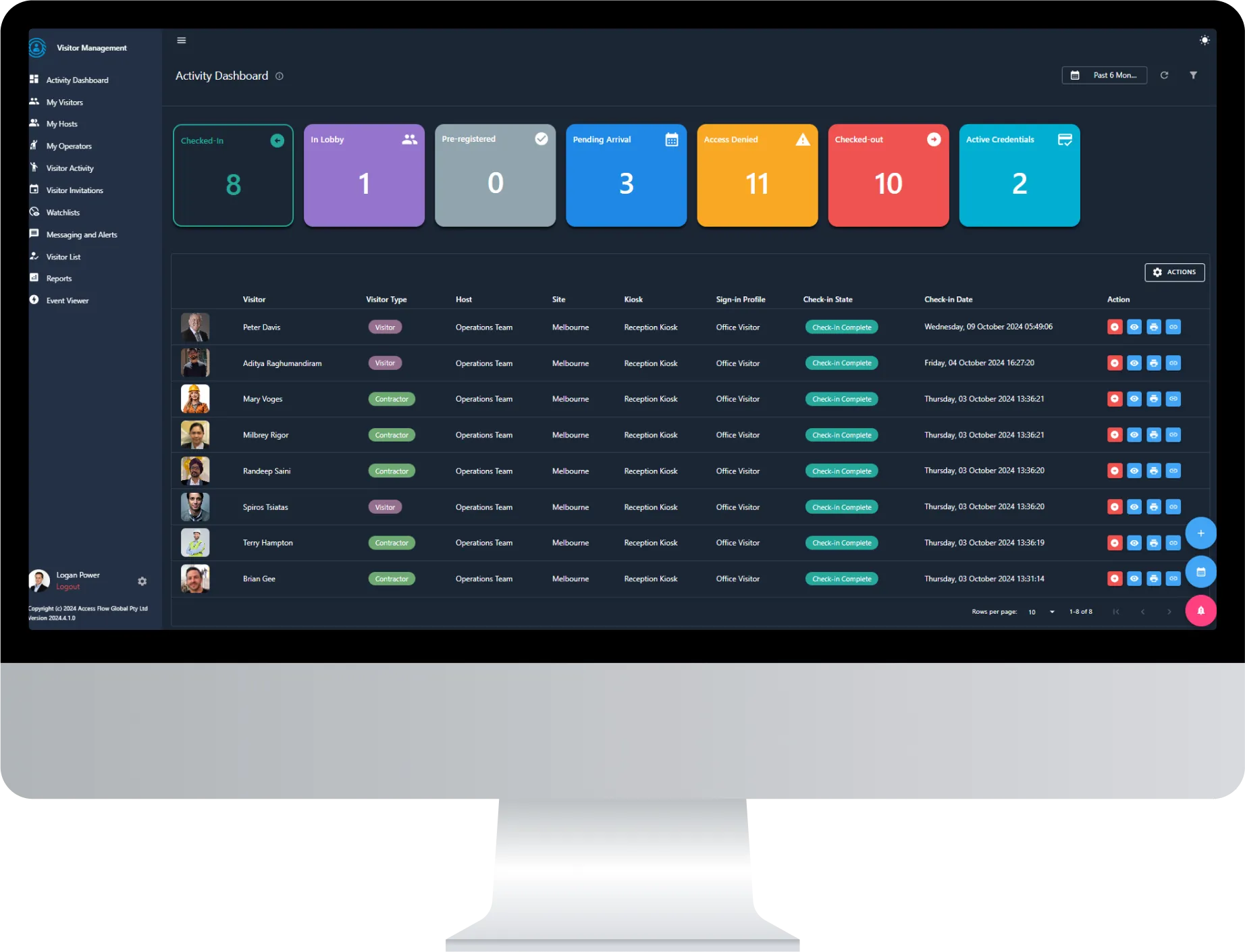
Transport and logistics operators must be able to answer instantly: "Who is onsite right now, where are they authorised to be, and why?"
AccessFlow provides:
This live visibility supports incident response, safety management, and operational decision-making during emergencies, disruptions, or major incidents.
The ultimate measure of visitor management in the transport and logistics sector is its ability to withstand scrutiny following audits, incidents, or regulatory inspections.
AccessFlow provides a defensible, centralised record of:
By consolidating all visitor governance data into a single application, AccessFlow enables transport and logistics organisations to respond confidently to safety audits, regulator inspections, incident investigations, and post-event reviews without reliance on fragmented or manual records.
In the transport and logistics sector, visitor management is inseparable from safety, security, and supply chain assurance. AccessFlow enables operators to move beyond basic sign-in tools and implement a scalable, risk-based, and auditable visitor management framework aligned with the realities of high-volume, time-critical, and safety-sensitive operations.