


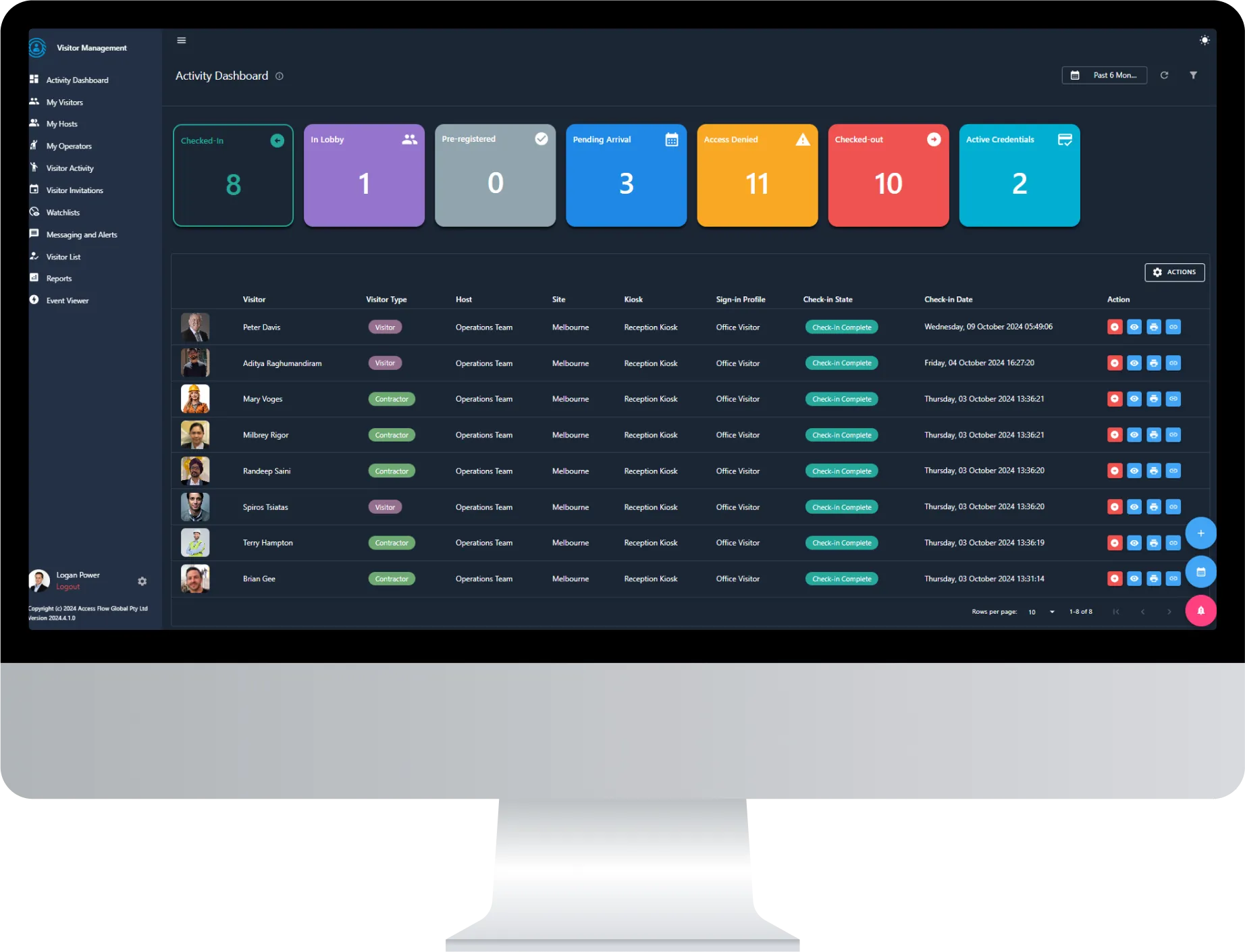
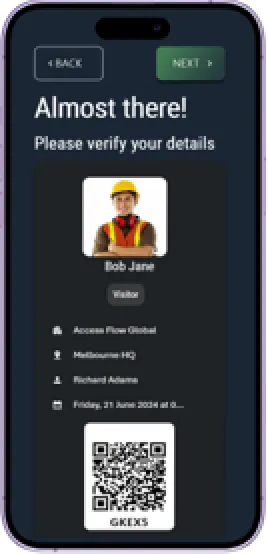
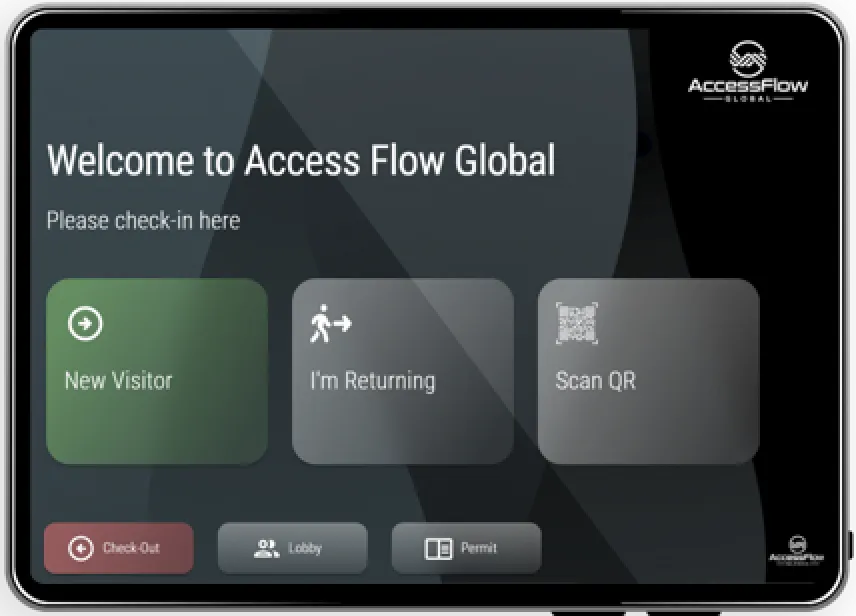



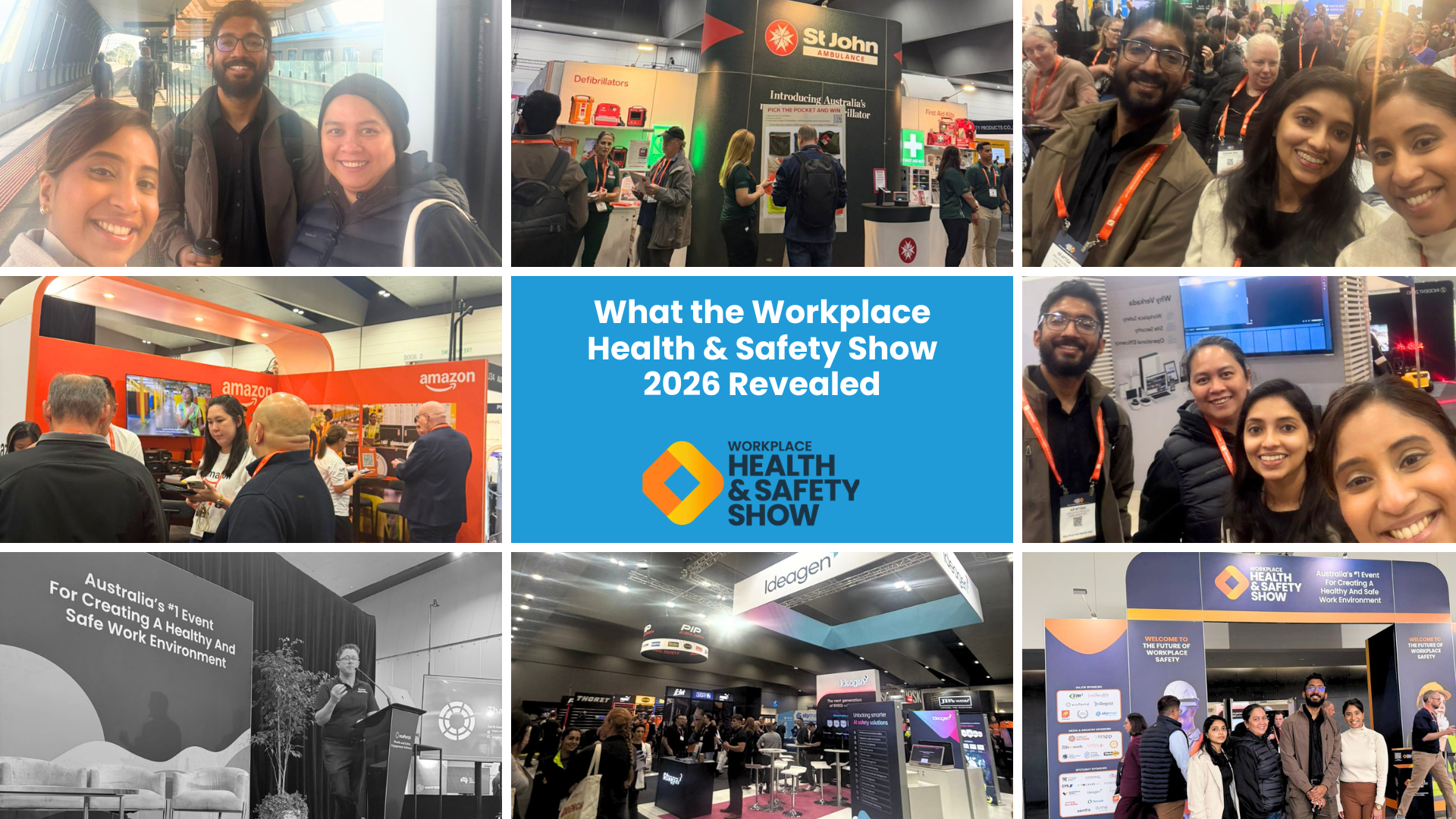
The Workplace Health & Safety Show, Melbourne 2026 provided valuable insights into how organisations are evolving their approach to workplace safety, visitor management, workforce operations, contractor compliance, and operational governance.
Our team spoke with safety leaders, operational teams, technology providers, and organisations across multiple industries. For those who couldn’t attend, we’ve summarised the key themes that emerged and what they signal for the future of workplace operations.
While Artificial Intelligence (AI) was certainly a major topic of discussion, the strongest takeaway wasn't about technology alone. It was more about reporting and review. Using it to enhance visibility, add focus to large data sets, simplify patterns, and creating connected environments that help organisations better manage their people, sites, compliance obligations, and operational risks.
The Shift Towards Connected Operations
One of the clearest trends was the move away from standalone systems toward connected operational ecosystems.
Whether discussing visitor management, workforce operations, contractor compliance, emergency response, or security, organisations are increasingly seeking systems that work together rather than in isolation.
The challenge is not a lack of systems, but fragmented information across multiple platforms, creating blind spots and limiting overall visibility.
Leading organisations are addressing this by building connected environments where visitor management, workforce management, contractor compliance, and security systems contribute to a single operational view, improving visibility, governance, and decision-making speed.
From a Software and Technology Perspective
The focus has moved beyond simply digitising processes.
Organisations are now looking for software that helps them connect people, compliance, facilities, and operations in a meaningful way.
Several vendors showcased solutions that use automation to reduce manual administration, improved reporting, and simplify compliance processes. There was also significant interest in technologies that can help organisations identify trends, flag potential risks, and improve operational awareness.
One thing that stood out was that many organisations are still managing complex workflows across multiple systems. Whether it is contractor onboarding, workforce compliance, visitor access, or safety reporting, there is a growing demand for platforms that can streamline these processes through a single interface.
For software providers, the opportunity is no longer just about adding features. It is about helping organisations simplify complexity and gain greater visibility across their operations.
From a Mobile Workforce Perspective
The mobile workforce discussion centred on accessibility, usability, and real-time information.
With employees, contractors, and visitors spread across multiple sites, organisations are prioritising mobile-first solutions that allow users to complete tasks, manage compliance, and access critical information from anywhere.
A key priority is real-time visibility, knowing who is on site, their compliance status, and whether they can be accounted for during an incident.
As operational environments become more complex, mobile workforce technology is becoming essential for visibility, accountability, and safety.
The Industry's Focus on Simplicity
One of the most notable themes was the shift toward simplicity.
The most effective solutions were not the most complex, but the ones that reduced friction—QR-code reporting, simplified onboarding, automated compliance workflows, and streamlined workforce processes.
This reflects a broader industry shift: the easier a process is, the higher the adoption. Higher adoption leads to better data, stronger insights, and improved outcomes.
Knowledge Hub
Beyond the exhibition floor, the Knowledge Hub sessions provided deeper insight into the future of workplace safety and operations, particularly the practical application of AI.
A consistent message emerged: workplace safety is evolving, and AI is increasingly being embedded into everyday workflows rather than treated as a standalone innovation.
The focus areas included improving efficiency, reducing administrative burden, and enabling faster, more accurate responses across safety and compliance processes.
The key takeaway was clear; AI delivers the most value when applied practically to real operational challenges.
AI Is Becoming More Practical
AI was featured throughout the conference, but the conversation has matured significantly.
The focus is no longer on AI as a standalone technology. Instead, organisations are looking at how AI can support existing processes and improve operational efficiency.
The most common use cases discussed included:
What organisations are ultimately seeking is less administration, faster reporting, improved data quality, and earlier identification of risks.
While AI continues to evolve, the strongest message from the conference was that organisations want practical outcomes rather than technology for technology's sake.
Our Overall Takeaway
If there was one theme that consistently emerged throughout the conference, it was this: The future of workplace operations is becoming increasingly connected.
Organisations are looking for greater visibility across their visitors, workforce, contractors, compliance activities, and operational environments. They want fewer disconnected systems, less manual administration, and faster access to meaningful information.
The conversation is no longer just about visitor management, workforce management, or contractor management as separate functions. It is about bringing these disciplines together to create safer, more efficient, and more resilient workplaces. It was encouraging to see so many organisations moving in this direction.
The technology will continue to evolve, but the organisations that gain the greatest advantage will be those that can connect their people, processes, compliance, and operations into a single operational ecosystem.


.png)