


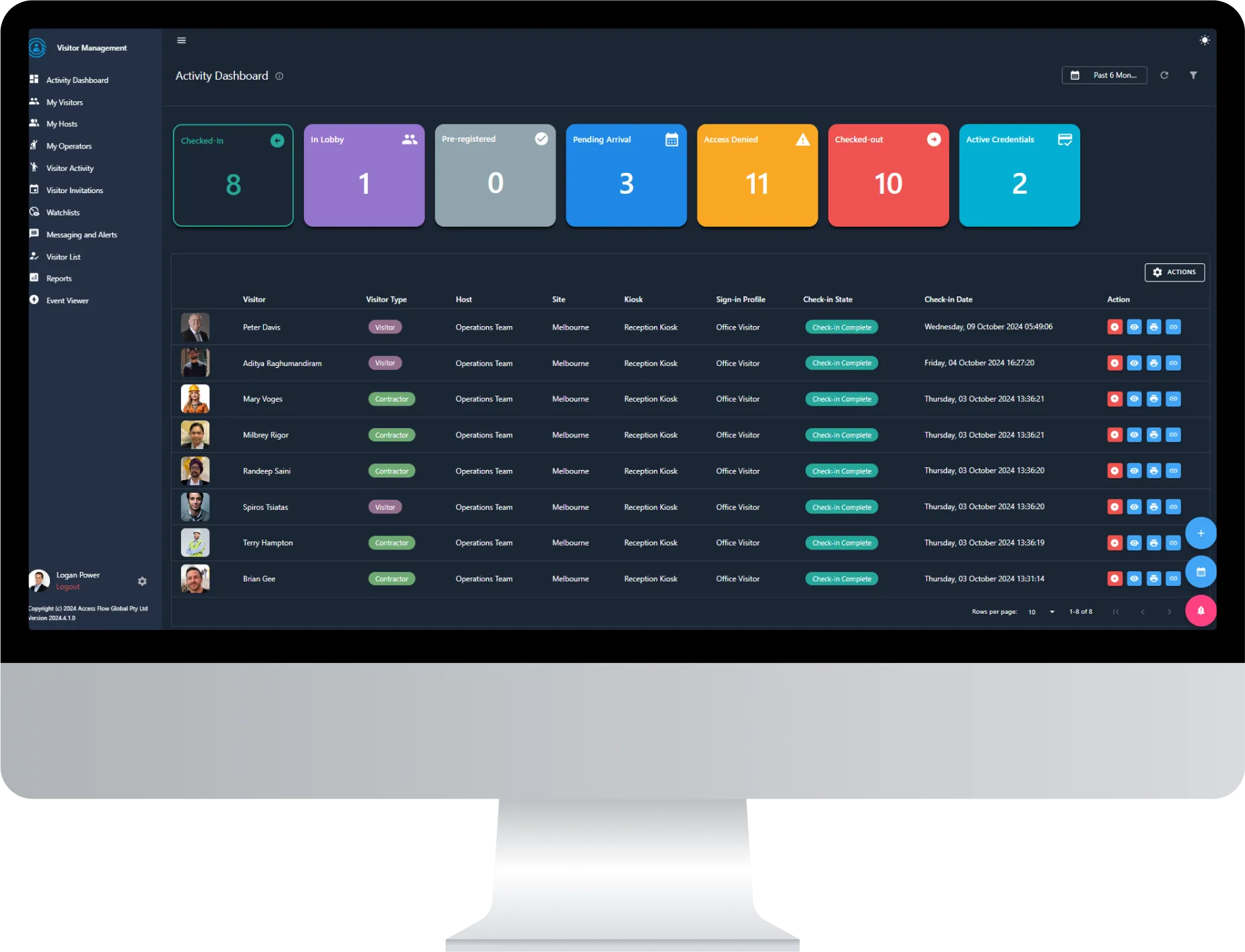




A fire alarm goes off on campus, mid-semester, and the clock starts. Lecture theatres are full, the library is busy, a contractor crew is working on level three, and a group of prospective students is halfway through a campus tour.
In the next few minutes, one question matters more than any other: who is still inside?
For universities, that question is often a hard one. Hundreds of students, staff, contractors and visitors move between buildings every hour, and none of them follow a fixed roster. Paper lists don’t do the job.
That is where AccessFlow emergency mustering and management system comes in. It brings live presence data, evacuation tracking, communication and reporting into one platform. There’s no juggling of separate systems. You get one mustering and management system to track people, notify those affected, monitor responses and create incident records.
Universities carry a significant duty of care. They need to be able to demonstrate effective emergency procedures for everyone on site, not just employees. That includes students, contractors and visitors who may be unfamiliar with the building they are in.
When an evacuation happens, speed and accuracy save lives. AccessFlow provides an end-to-end solution for managing and tracking people during an emergency, from the first alert through to resolution.
Here are the three capabilities that make the biggest difference.
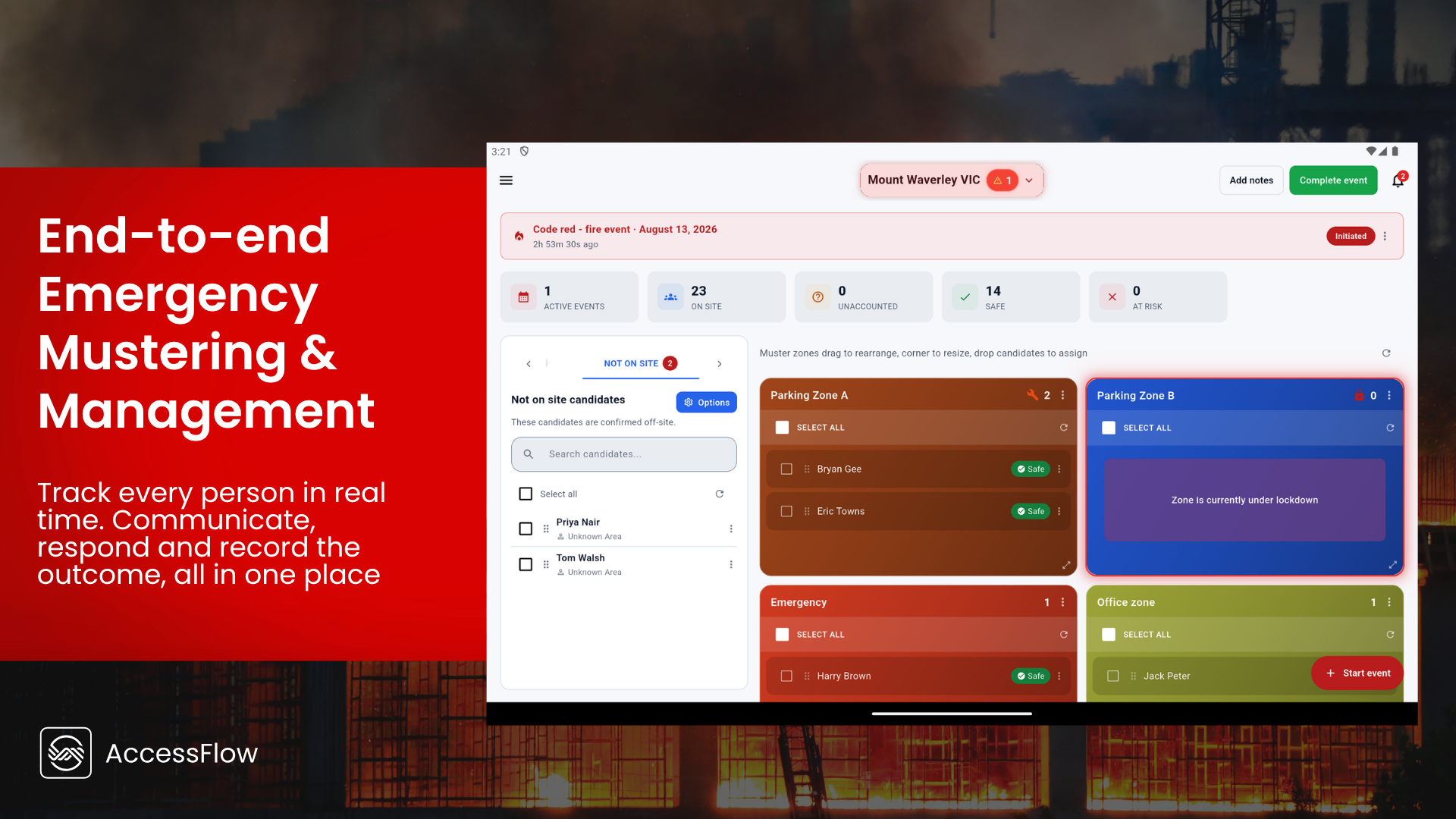
You cannot protect people you cannot see. AccessFlow gives emergency teams real-time information on employees, contractors and visitors in one centralised platform.
On a university campus, this matters because:
The live count dashboard uses presence data to identify who may be impacted. AccessFlow integrates with a wide range of physical access control systems and card technologies, so it can draw on the access infrastructure your campus already has. Data is continuously synced between the access control system and the cloud service, so the latest information is always available.
Mixed mode muster: one live list for everyone
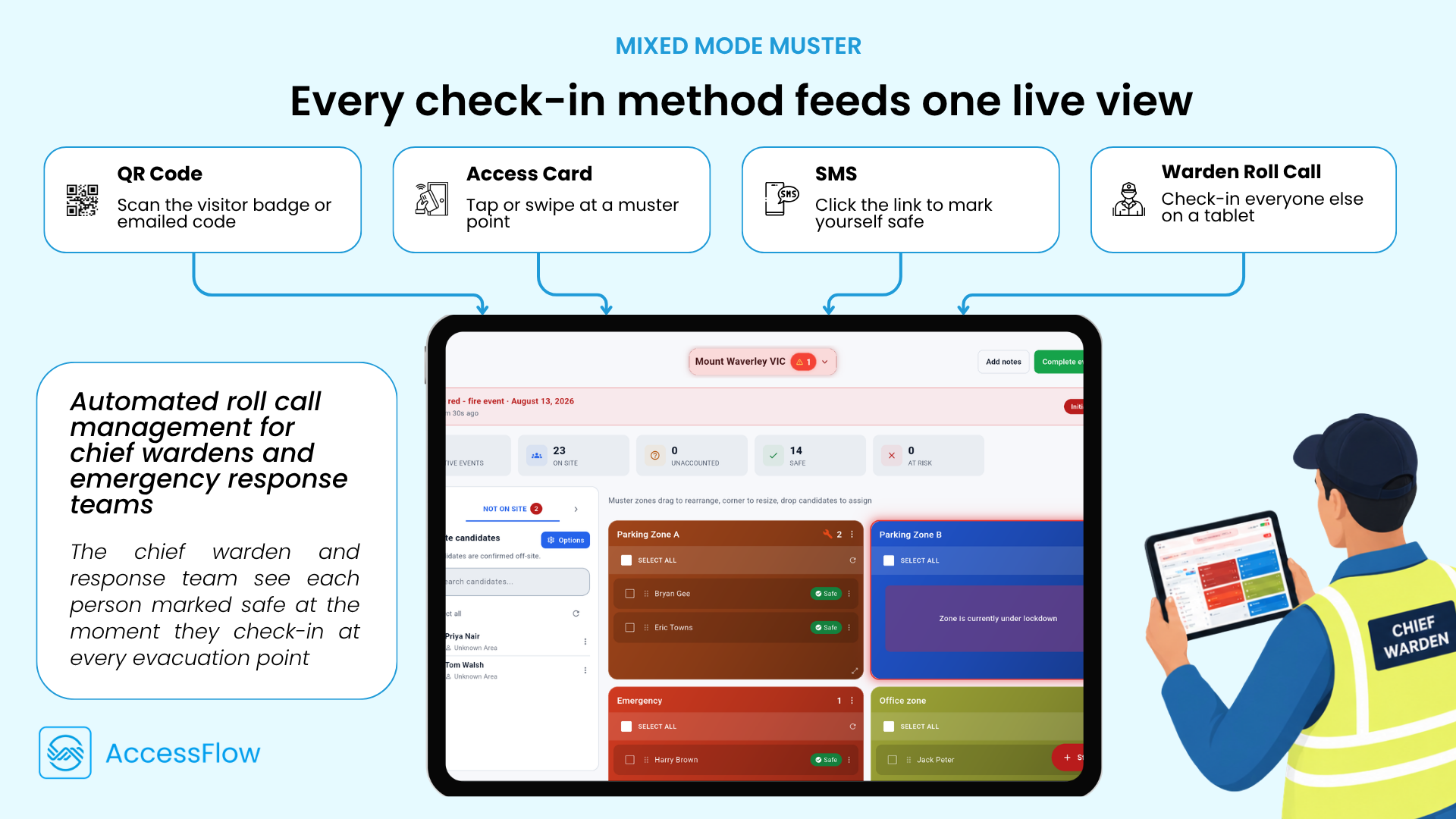
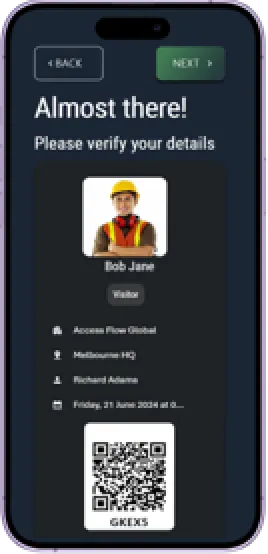
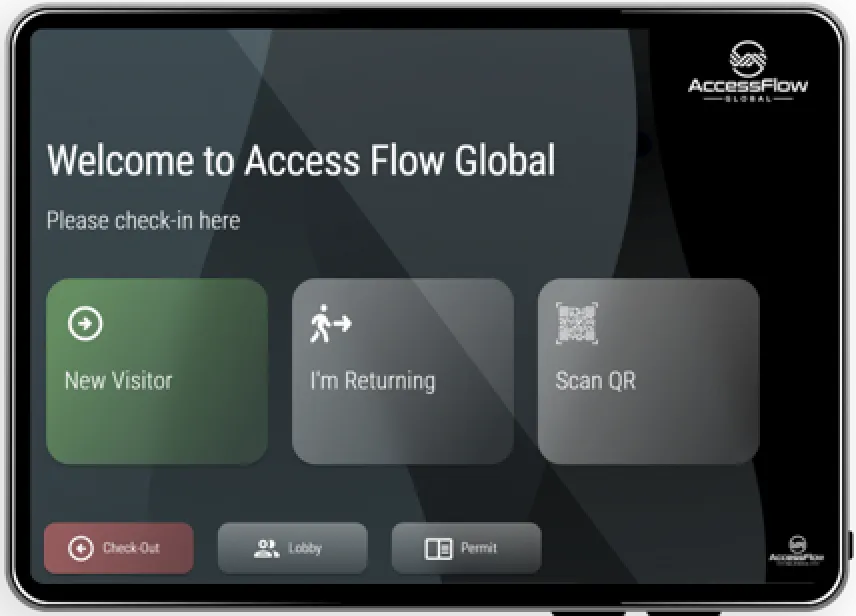
No single check-in method suits a whole campus. So AccessFlow offers four ways to check in at a muster point, all feeding one live count:
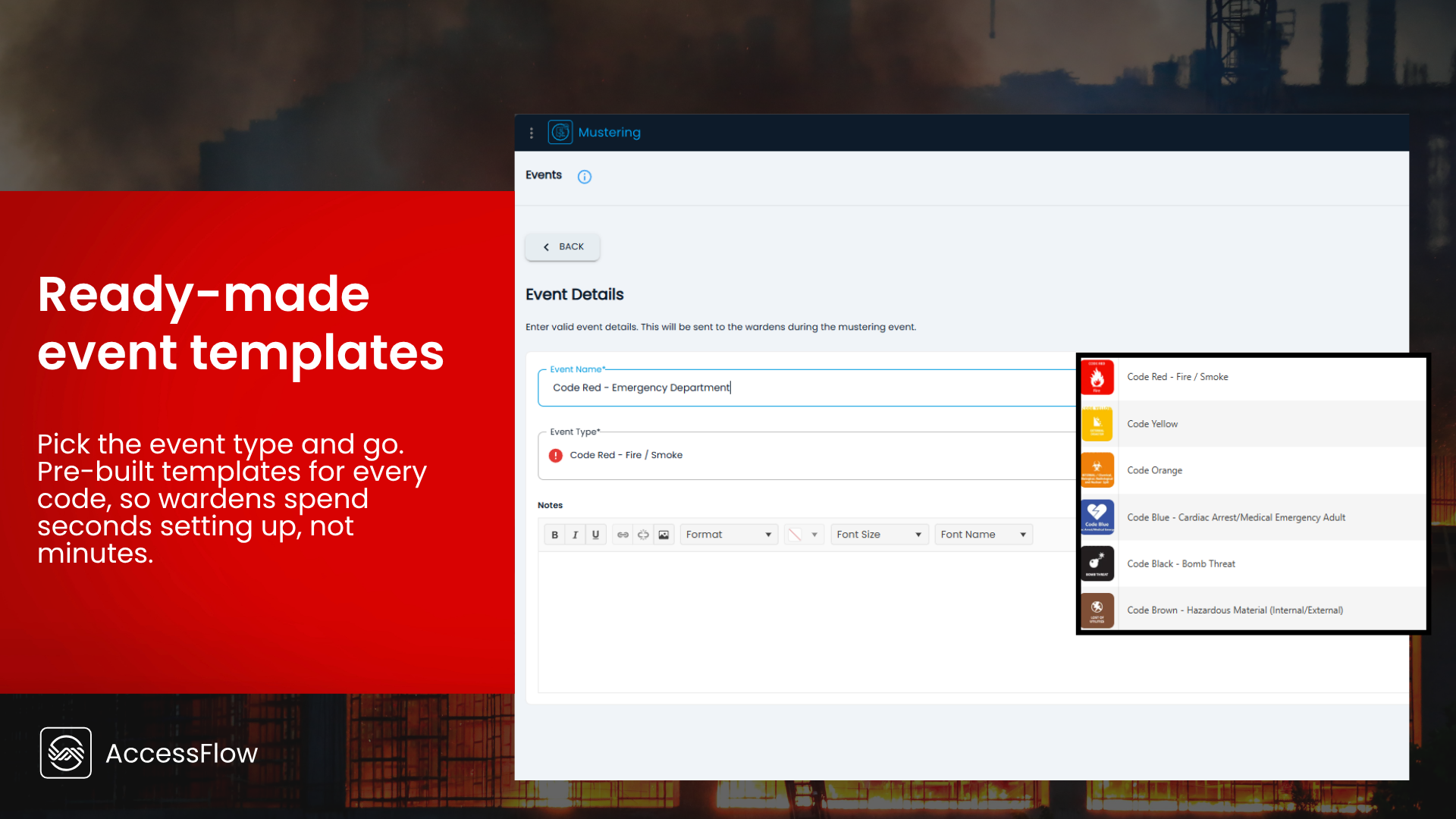
Pre-built event templates let teams start the response straight away, instead of setting up from scratch. Once people leave the building, the challenge shifts to accounting for everyone at the muster point. AccessFlow lets teams monitor zone-based headcounts and quickly identify who is unaccounted for, using names and last known locations. A built-in chat feature also lets fire wardens communicate with their team in real time.
For a large campus, this is where the platform really earns its place:
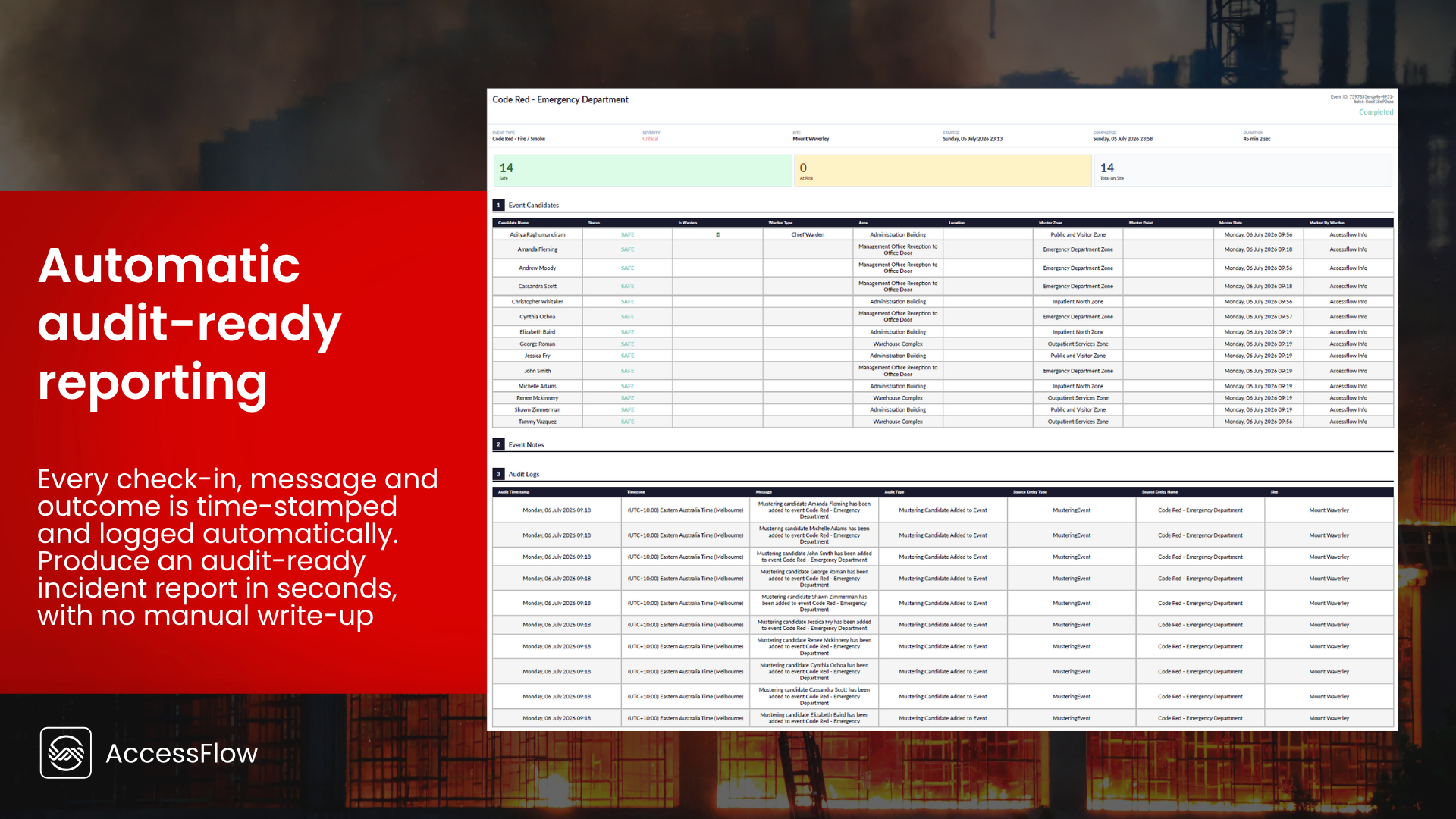
Evacuations do not end at the muster point. Wardens, security teams and campus leaders need to stay informed as the incident evolves. Afterwards, the university needs to show what happened and how it responded.
AccessFlow supports this with:
Every event, response and evacuation outcome is recorded automatically with a timestamp, whether on the web or in the app. The result is audit-ready reporting that supports compliance, internal review and continual improvement, without relying on separate systems.
Is your campus ready for the unexpected? Want to see how AccessFlow could work for your campus? Get in touch to book a demonstration.