





Why AccessFlow Now Features Rotating QR Codes-and What It Means for Your Site
Visitor and workforce check-in should be fast, secure, and self-service. With AccessFlow's latest update, it is.
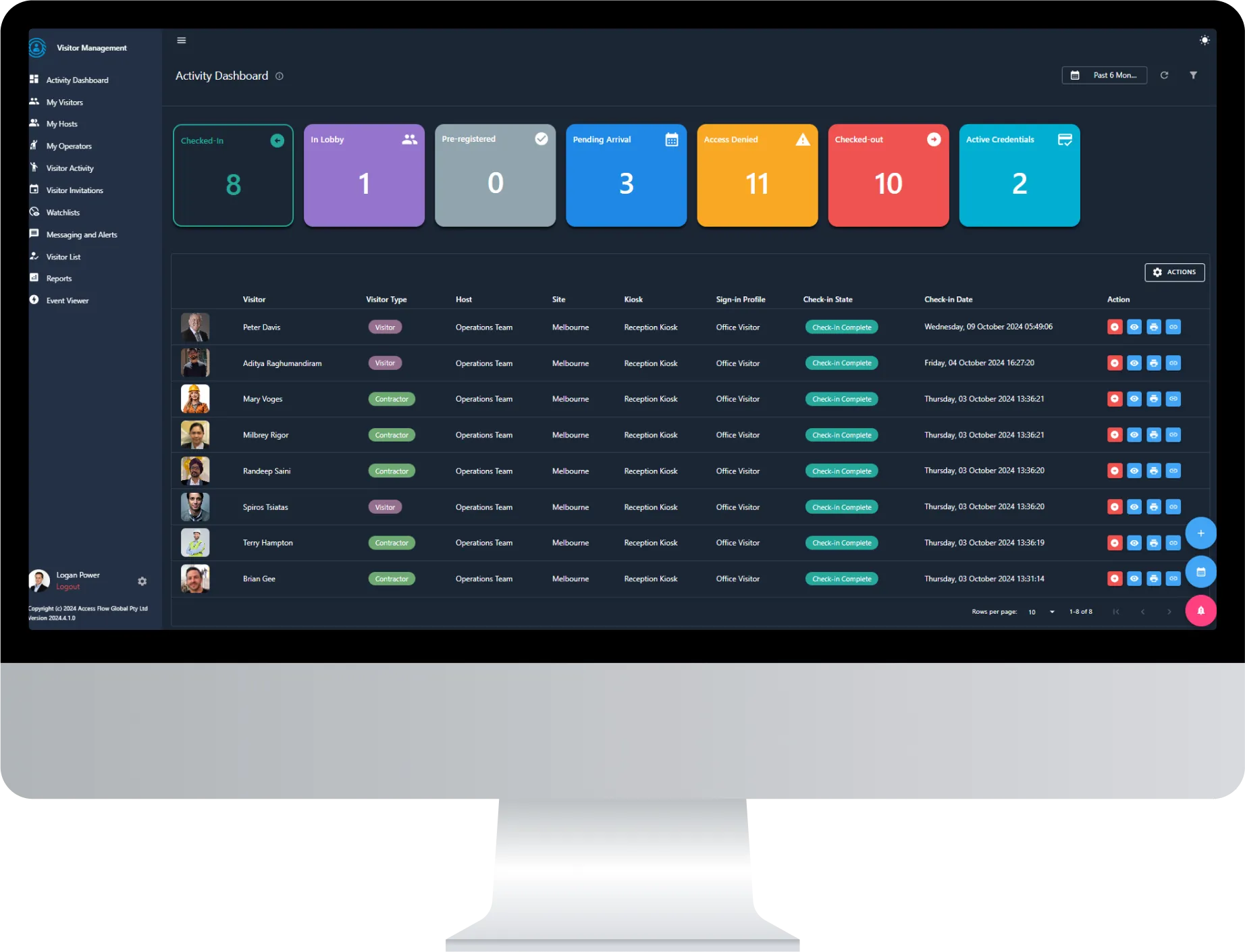
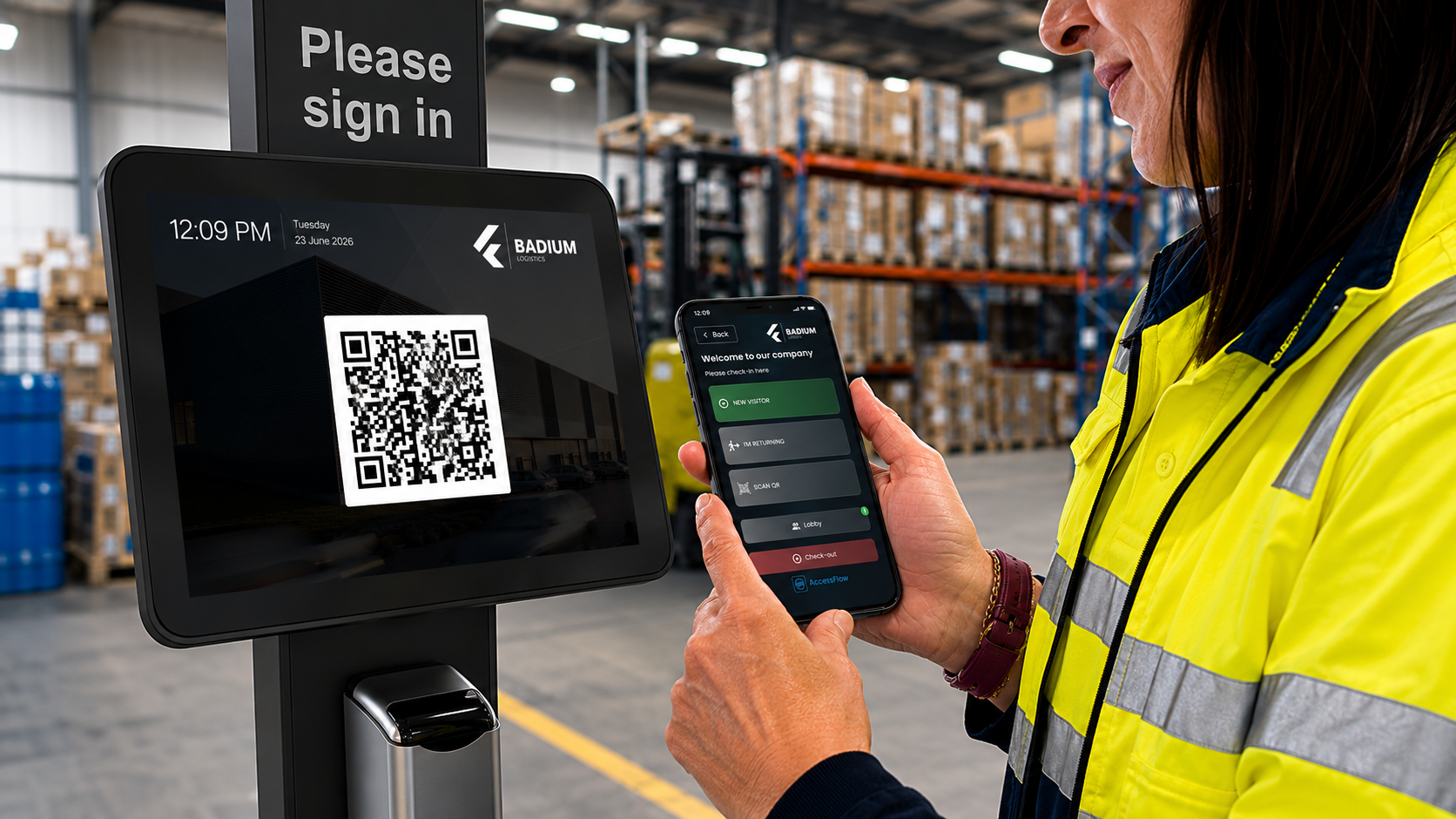
AccessFlow now displays a rotating QR code on kiosks, reception TVs, or a bespoke AccessFlow QR Code display unit-giving visitors and workers a simple scan-and-go check-in from their own smartphone. Once a code is scanned, it expires immediately and a fresh code takes its place on screen. Even if no one scans it, the code automatically rotates after a short interval-for example, every 30 seconds-so there is never a stale code on display. No intervention from reception or security staff required.
Here's why we built it, and why it matters for the sites we serve.
The Problem with Static QR Codes
Static QR codes-the kind printed on a sign or fixed on a screen-are convenient, but they carry real risk. Anyone can photograph a static code, share it, and use it again later. In a physical security environment, that's a gap. It means check-in events can be replicated or spoofed, and there's no guarantee the person scanning the code is doing so at the kiosk, at the right time, on the right day.
For sites governed by strict access control policies-critical infrastructure, corporate offices, construction sites, mining operations-a static code simply isn't good enough.
How the Rotating QR Code Works
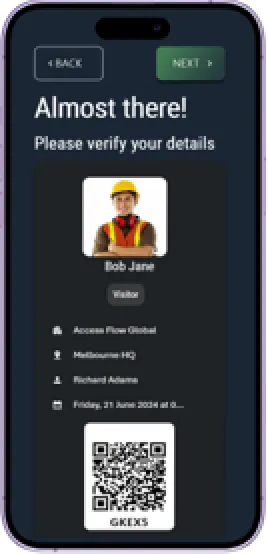
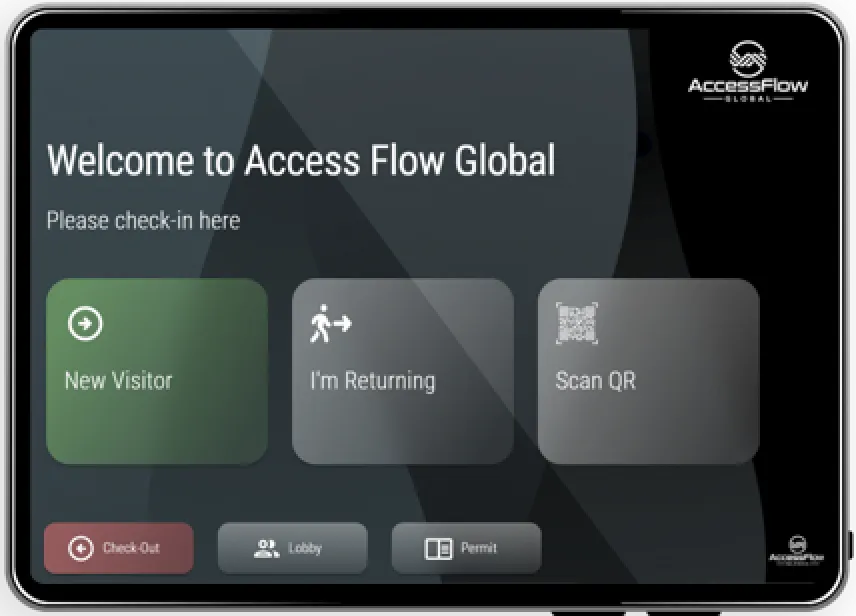
The concept is straightforward. An AccessFlow Kiosk, a reception TV, or a dedicated AccessFlow QR Code display unit shows a unique QR code on screen. A visitor or worker arriving on site opens their smartphone camera (or the AccessFlow companion app) and scans the code. That scan initiates the check-in workflow-identity verification, induction acknowledgement, host notification, and credential provisioning all happen from there.
The moment that QR code is consumed, it's gone. A new, unique code replaces it instantly. But the code also rotates on a timer-even without a scan, a fresh code appears after a configurable interval (for example, every 30 seconds). That means there is never a window where a code sits long enough to be photographed and shared. There's nothing to replay tomorrow, nothing to forward in a group chat. Every check-in is a one-time event tied to a one-time, time-bound code.
Why It Matters
Stronger Security Without More Friction
Rotating codes close the reuse gap without adding complexity for the person checking in. Visitors don't need to download anything in advance, remember a PIN, or wait for a receptionist. They scan, they check in, and the system handles the rest. Security teams get a verifiable, tamper-resistant check-in record without creating a bottleneck at the front desk.
Genuine Proof of Presence
Because each QR code is unique and single-use, a successful scan is meaningful proof that the individual was physically present at the kiosk at that point in time. This matters for compliance reporting, emergency mustering accuracy, and audit trails-particularly on sites where knowing exactly who is on-premises at any given moment is a regulatory or safety requirement.
Reduced Reception and Security Workload
Self-service check-in via QR removes the manual steps that slow down busy lobbies and site entry points. Reception staff aren't printing badges, looking up pre-registrations, or troubleshooting expired codes. The display handles the flow autonomously, and the rotating code mechanism means there's no maintenance overhead-no codes to refresh, no tokens to reissue.
Seamless Integration with Access Control
Like everything in the AccessFlow platform, the rotating QR check-in feeds directly into the access control system. Once a visitor completes the check-in workflow, their credentials can be provisioned in real time to the connected access control panel-whether that's Gallagher Command Centre, Genetec Security Center, Inner Range Integriti, or any other supported platform. The QR scan isn't a standalone event; it's the trigger for end-to-end identity and access provisioning.
Built for High-Throughput Environments
Shift changeovers, large contractor mobilisations, multi-visitor deliveries-these are the moments when entry points come under pressure. A rotating QR code on a kiosk, TV screen, or dedicated display unit lets multiple people check in rapidly, one after another, with each scan generating the next code instantly. There's no queuing for a shared terminal, no bottleneck on a single credential, and no risk of one person's check-in interfering with the next.
A Small Change, A Meaningful Difference
The rotating QR code isn't a headline feature-it's an infrastructure decision. It reflects a principle that runs through everything we build at AccessFlow: security controls should be invisible to the people moving through them, and uncompromising for the people managing them.
If your site uses AccessFlow or you're evaluating visitor and workforce management options, get in touch to see the rotating QR in action-on a kiosk, a reception TV, or a dedicated display unit.


.png)